structurephase-1
The Foundation of Everything
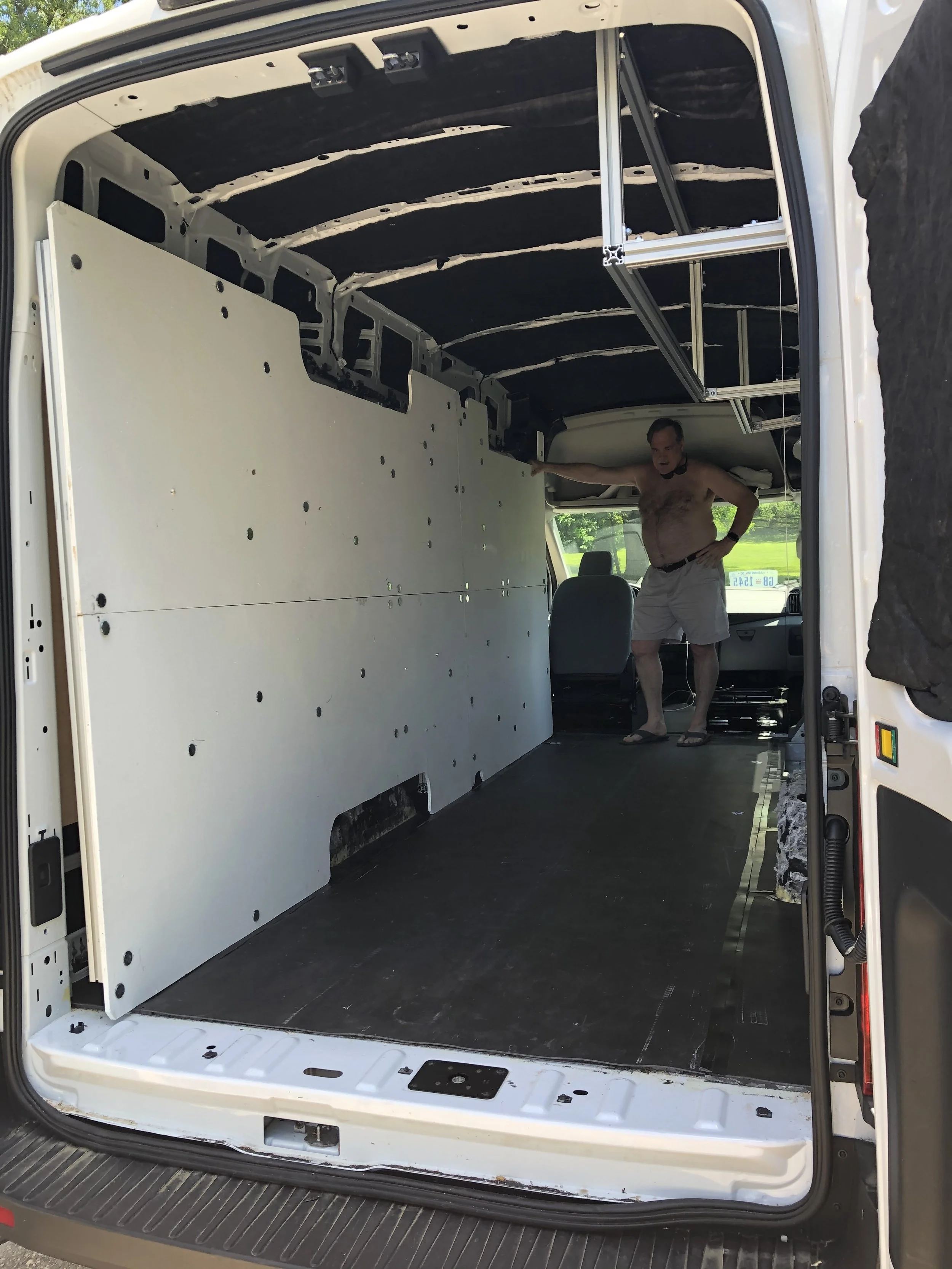
The floor is the base of the build and provides the features for the rest of the build. Floor #1 achieved insulation and flatness but lacked structural support - walls were bearing too much load despite being curved and hollow at counter height.
Design Inspiration
This approach was inspired by Orton Transit's floor design. The result: warmth, flatness, and the capability to securely anchor or quickly remove interior cabinet modules.
The 10-Layer System
(Bottom to top)
#1. Microfoam Corrugation Fillers
Retained from Floor #1, filling gaps in the van's metal floor corrugations.
#2. Mass Loaded Vinyl (MLV)
Three-strip layout with offset seams for:
- Dampening road noise
- Providing a stable plywood base
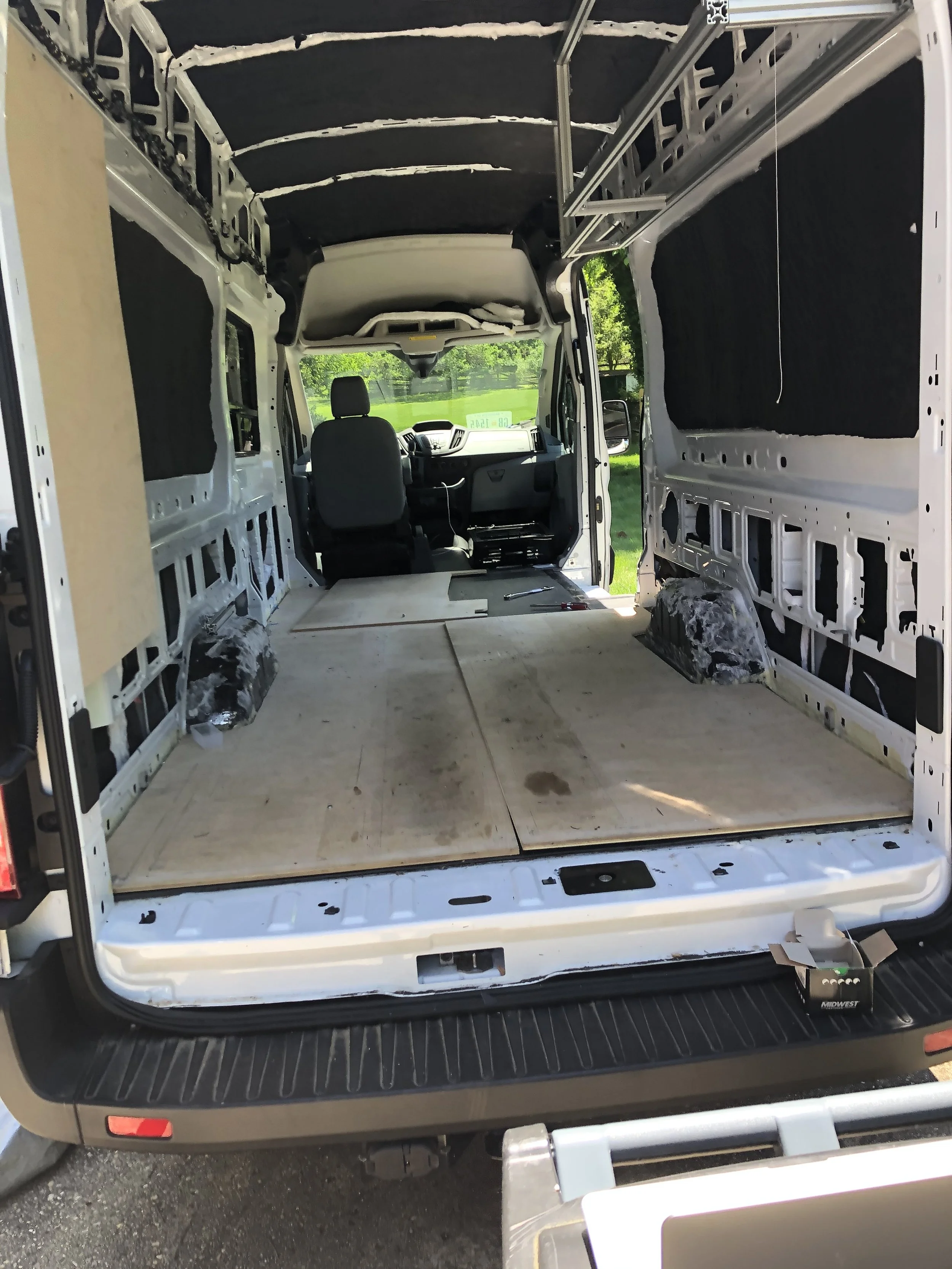
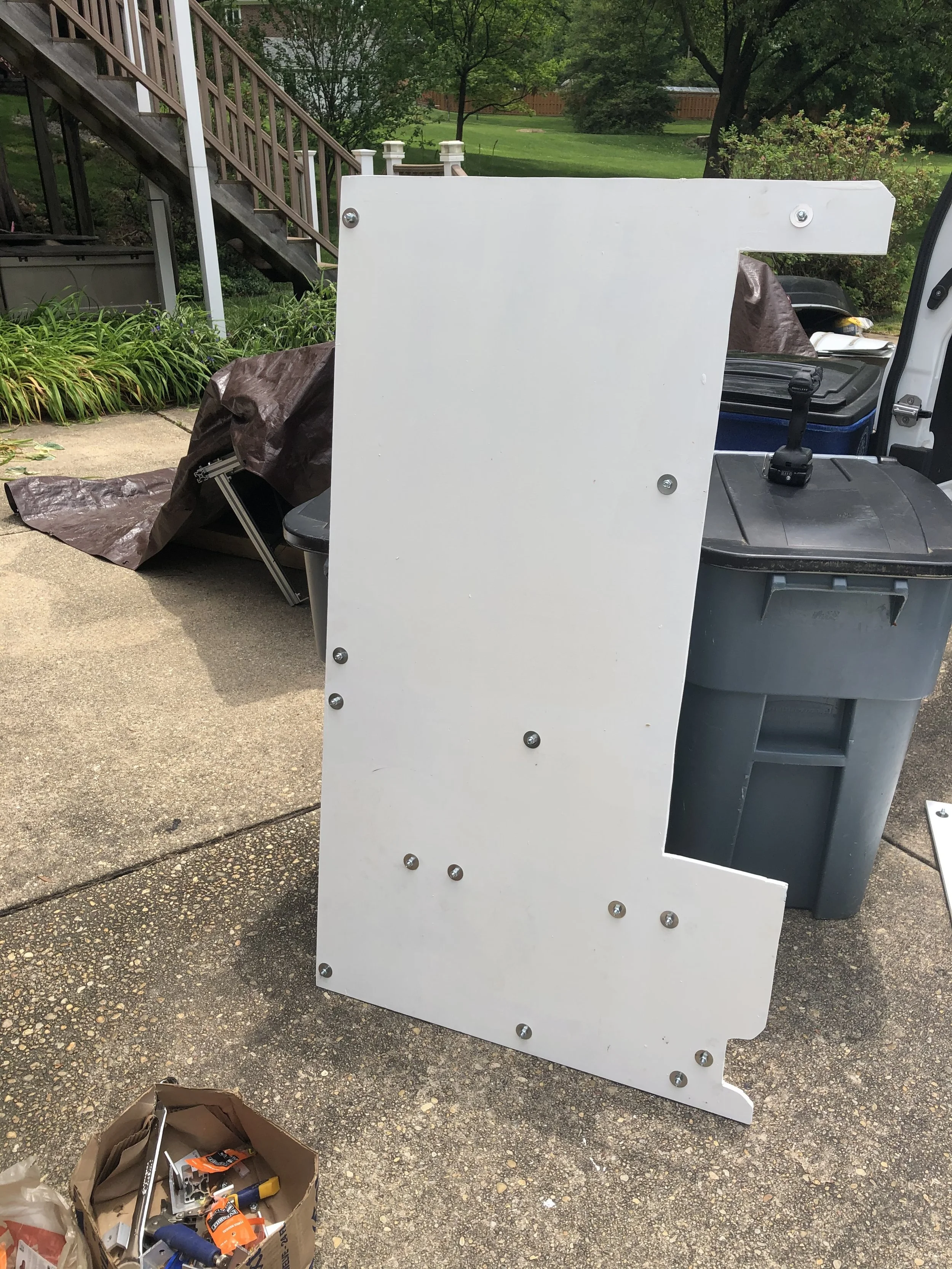
#3. Birch Plywood Floor
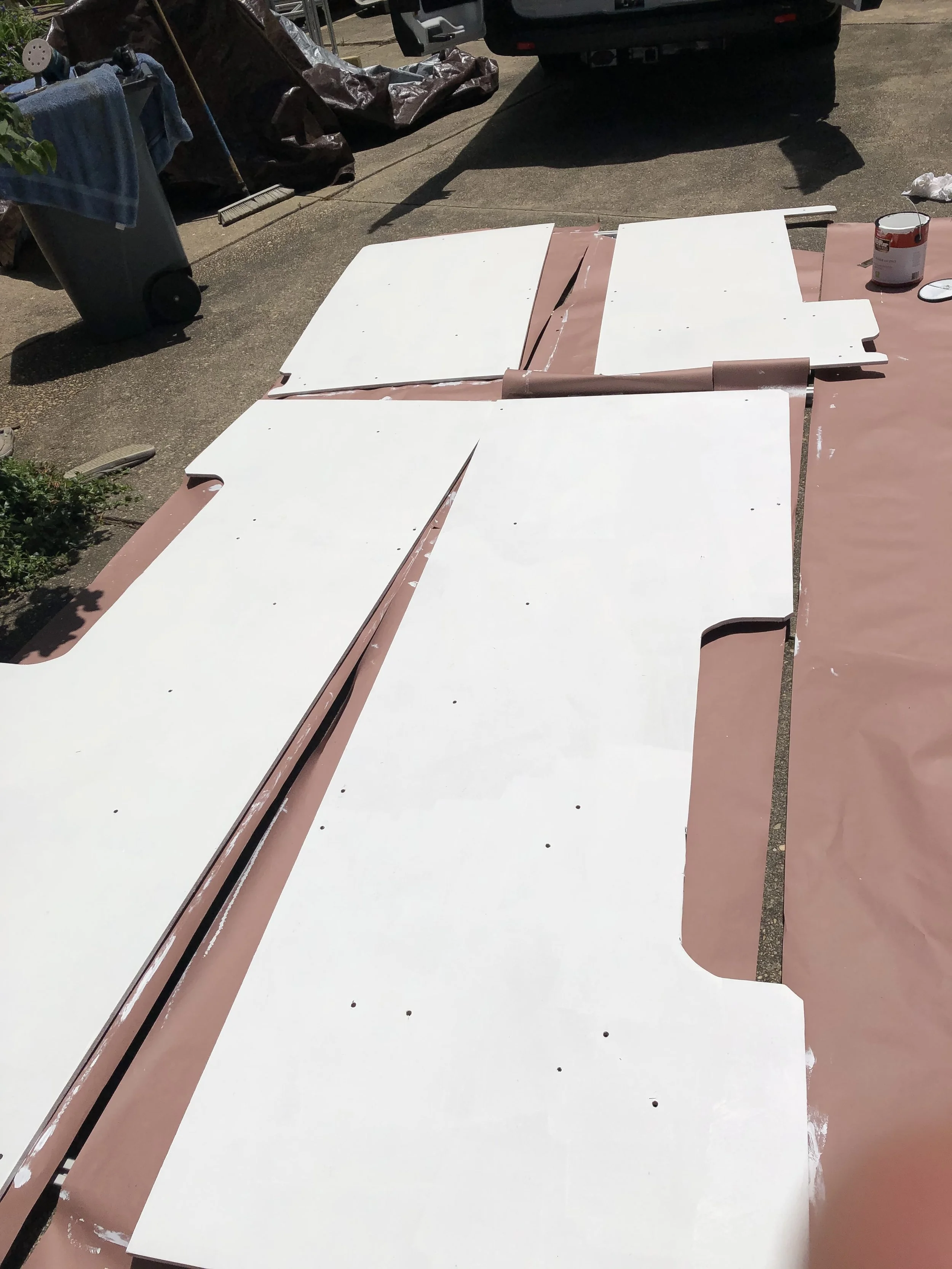
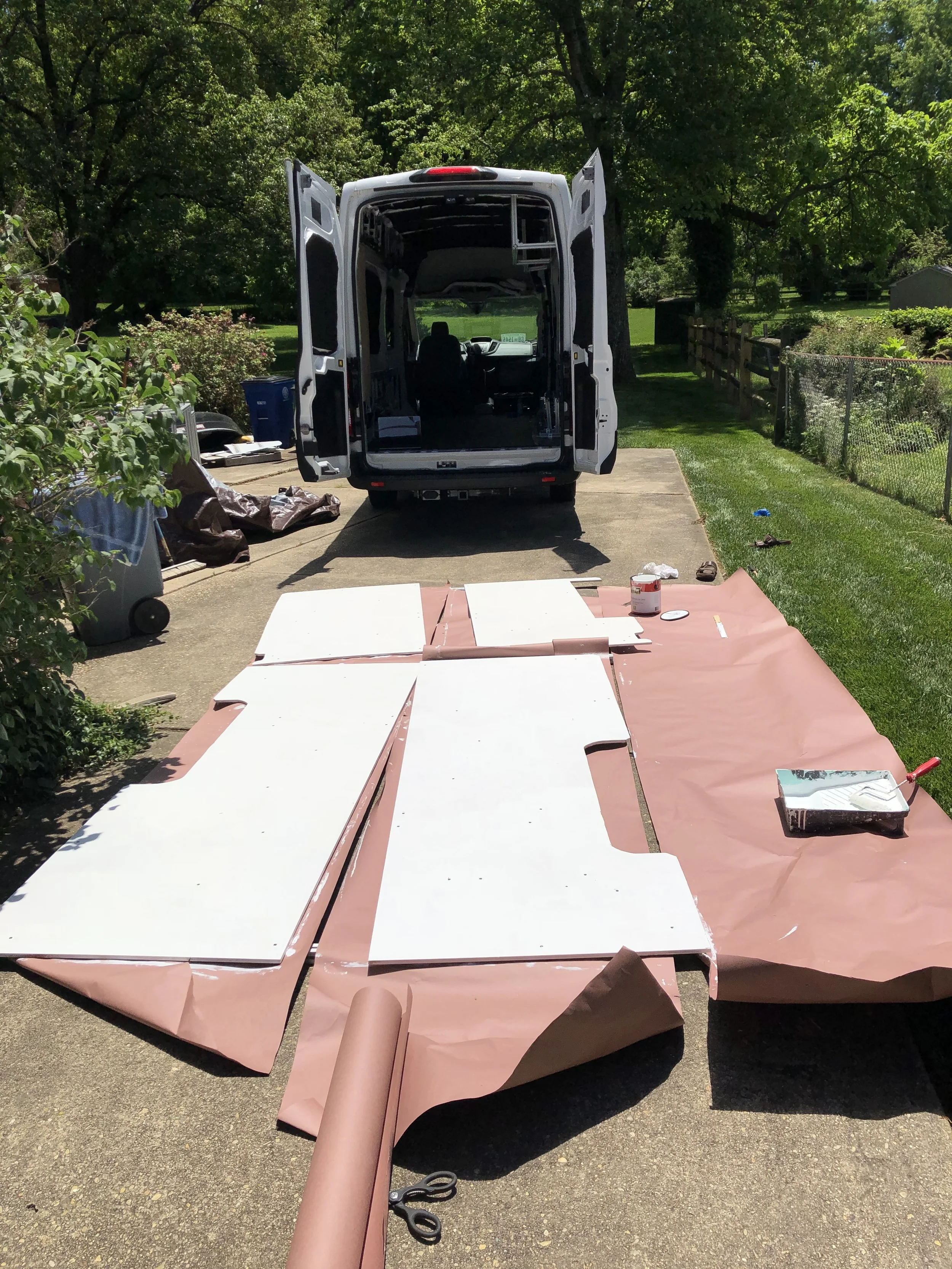
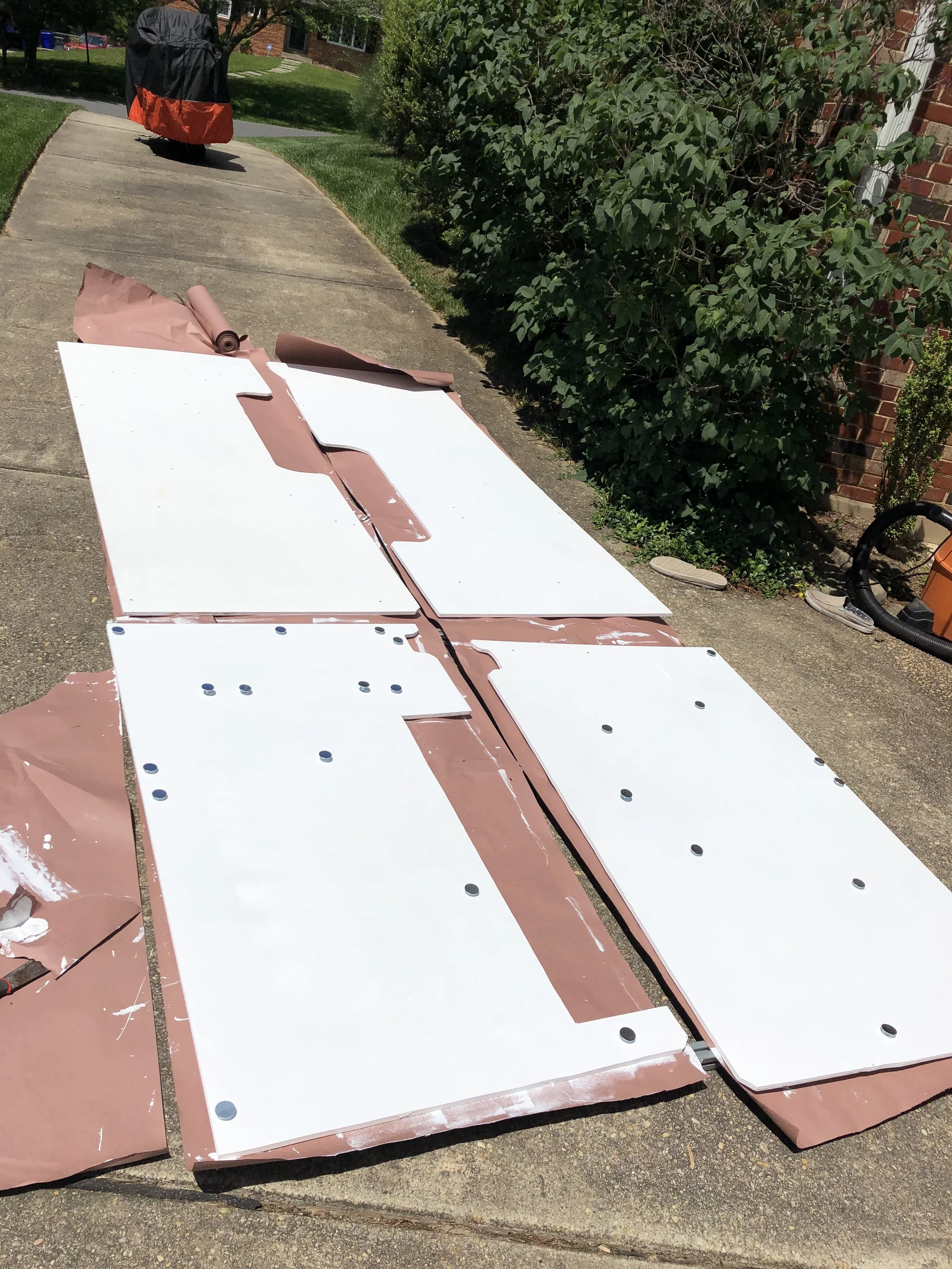
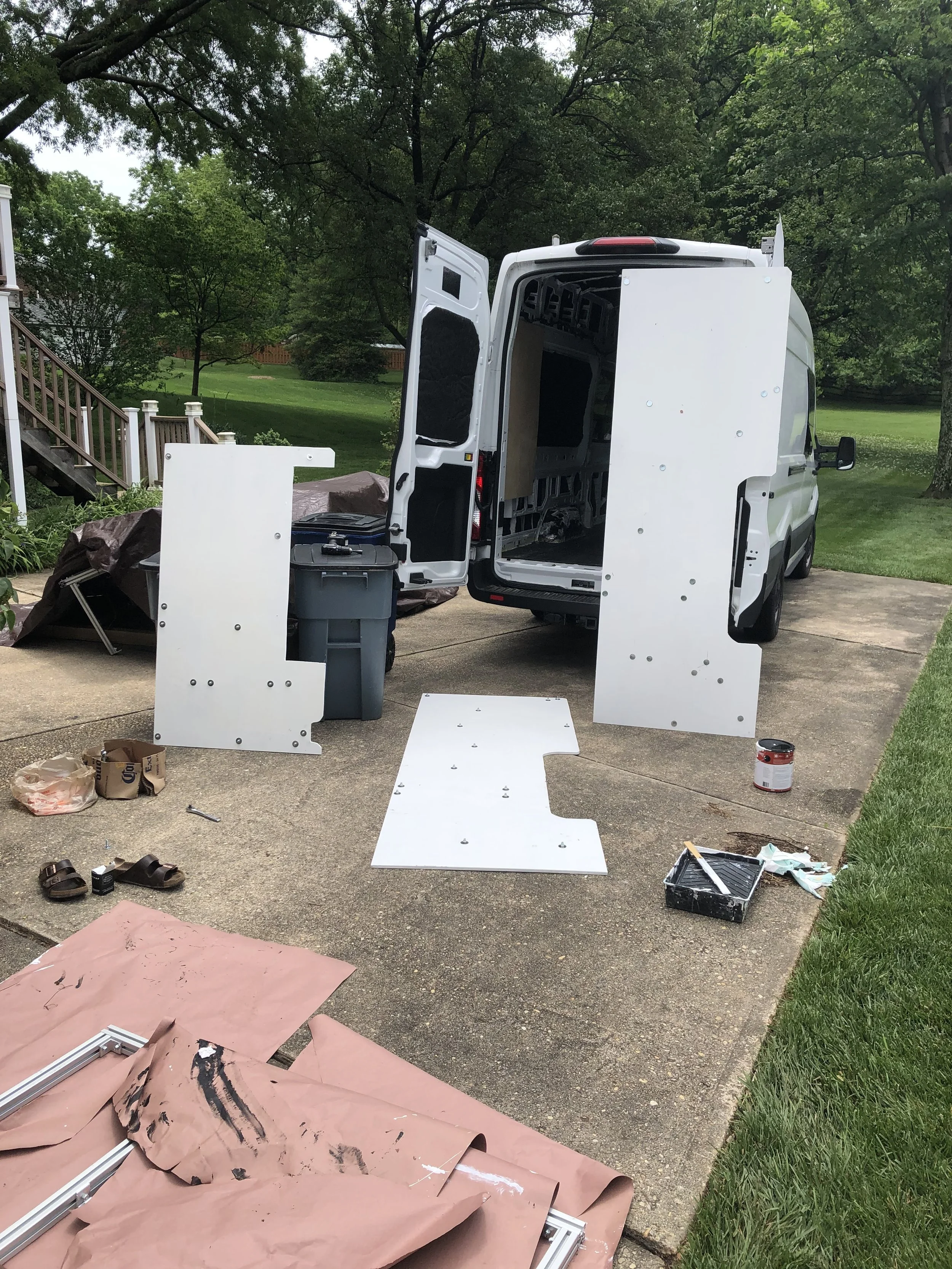
Four sections from 4×8 sheets of 1/2" material, primer-painted for moisture protection.
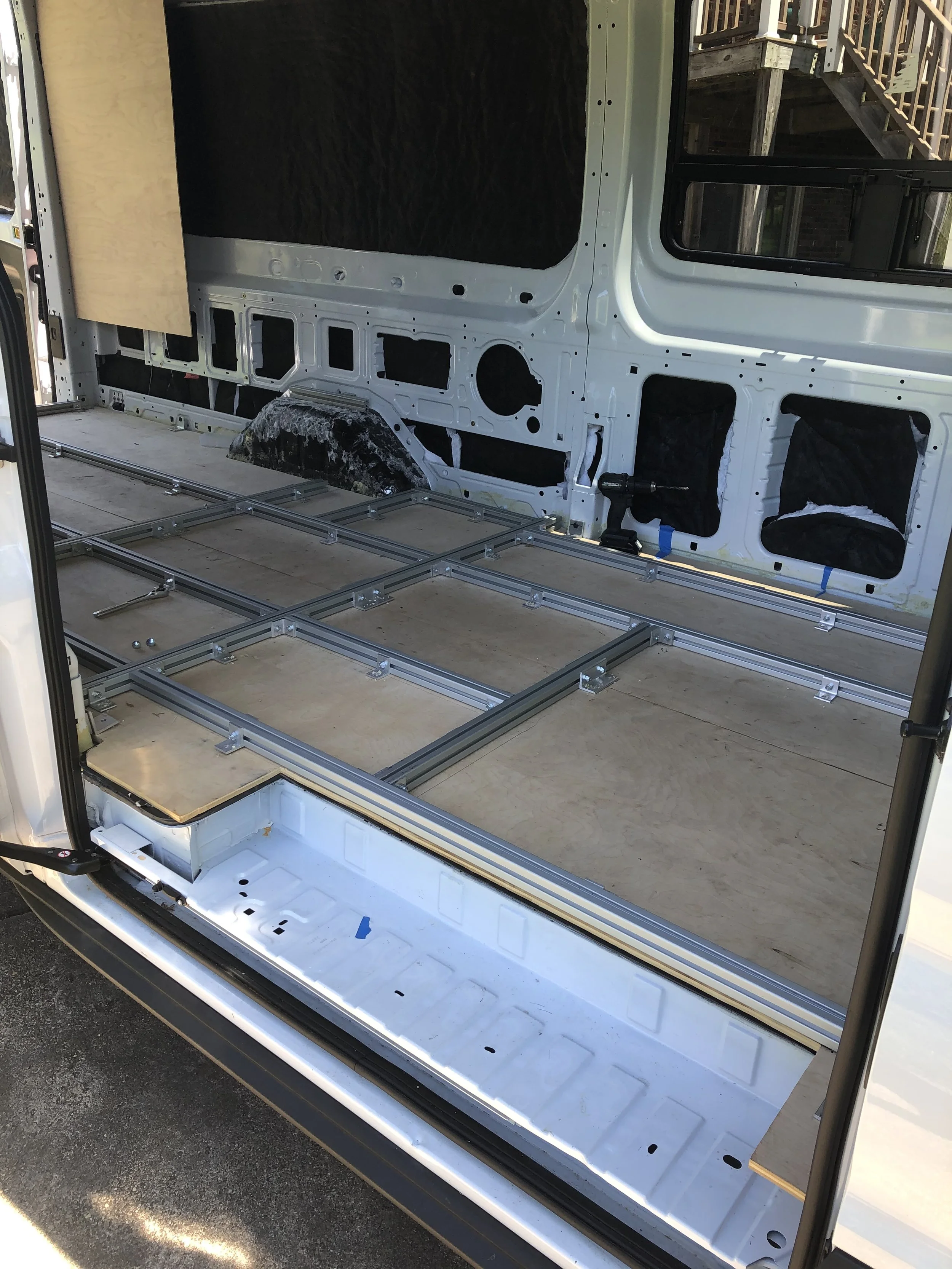
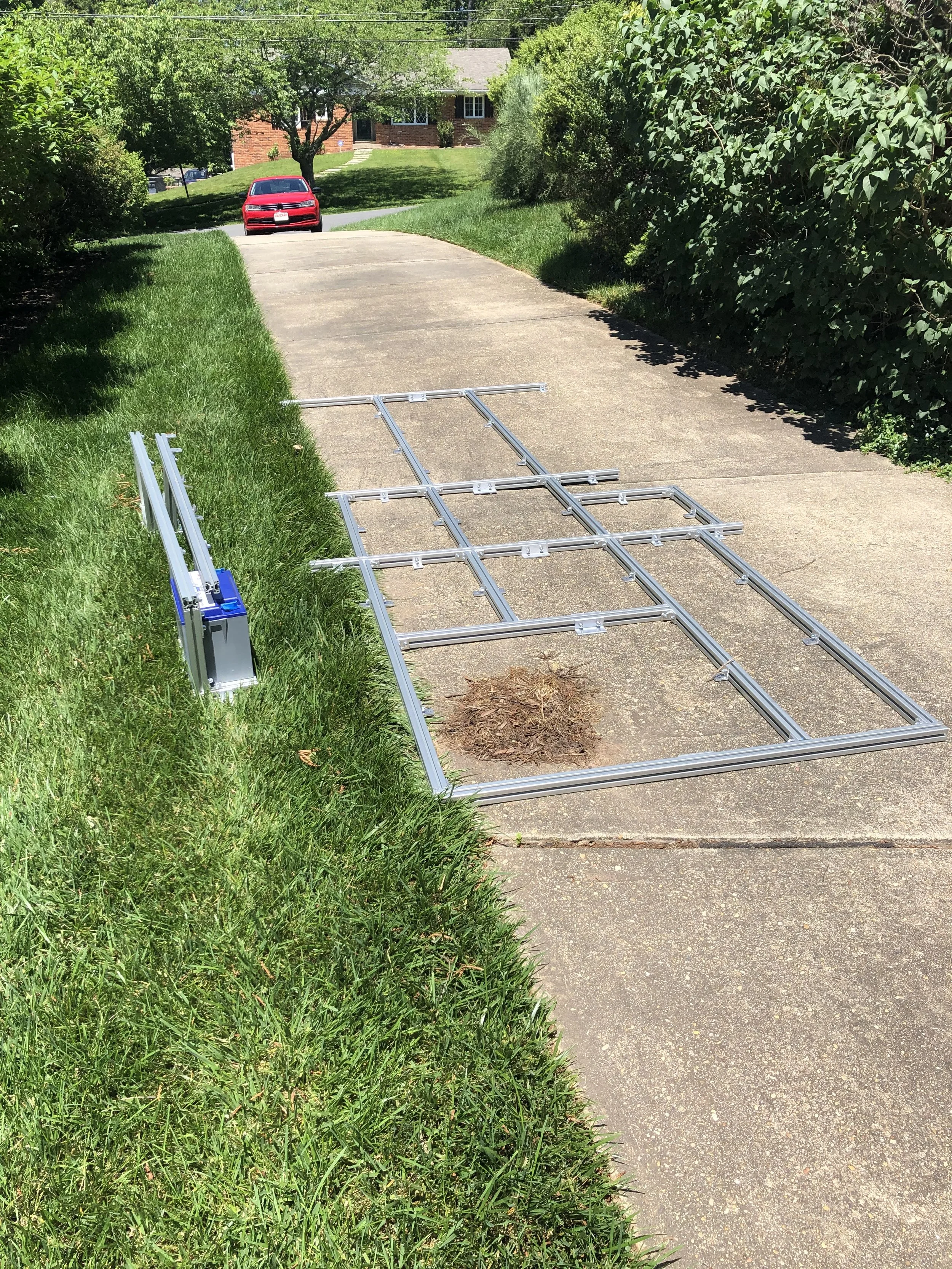
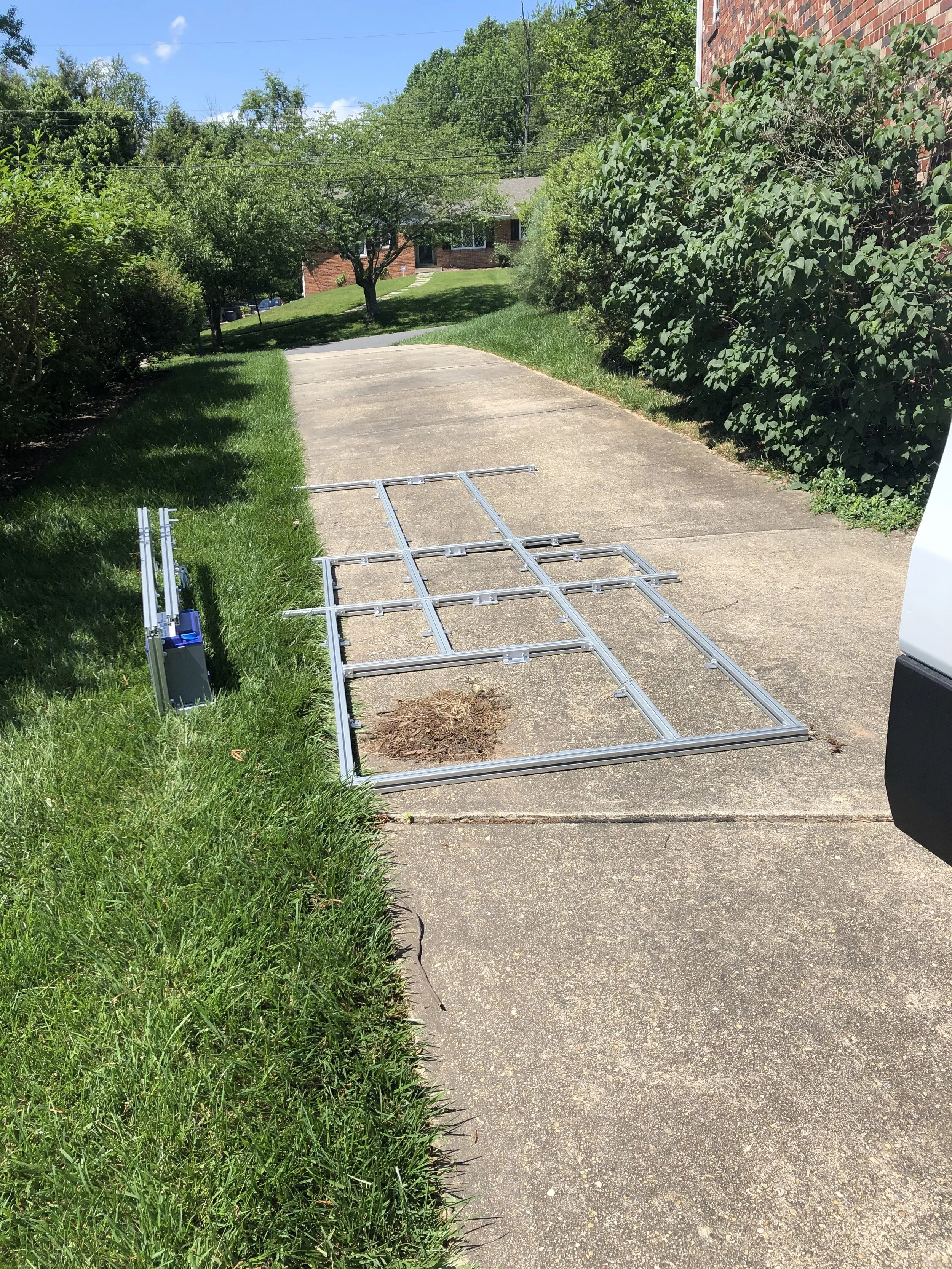
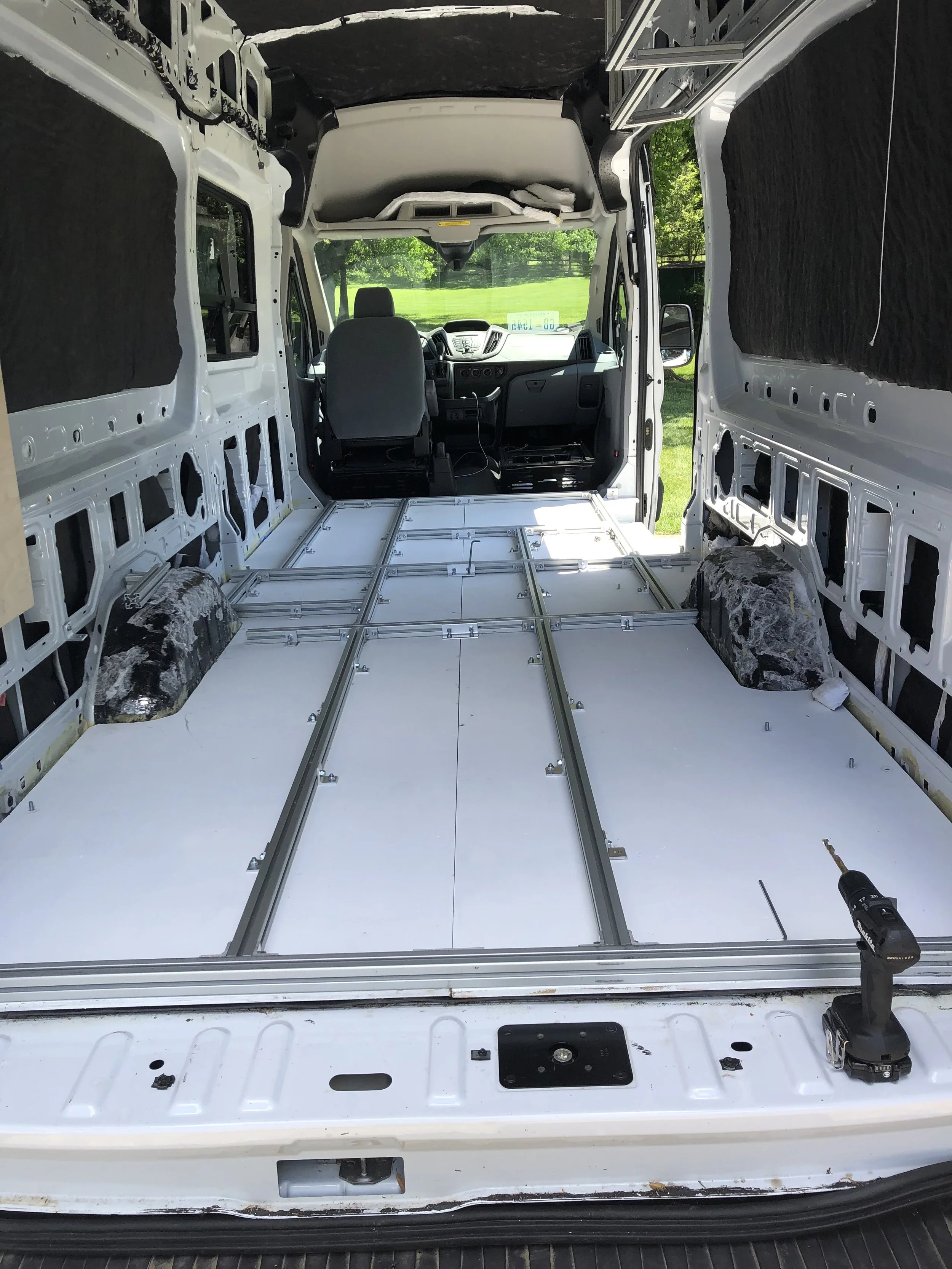
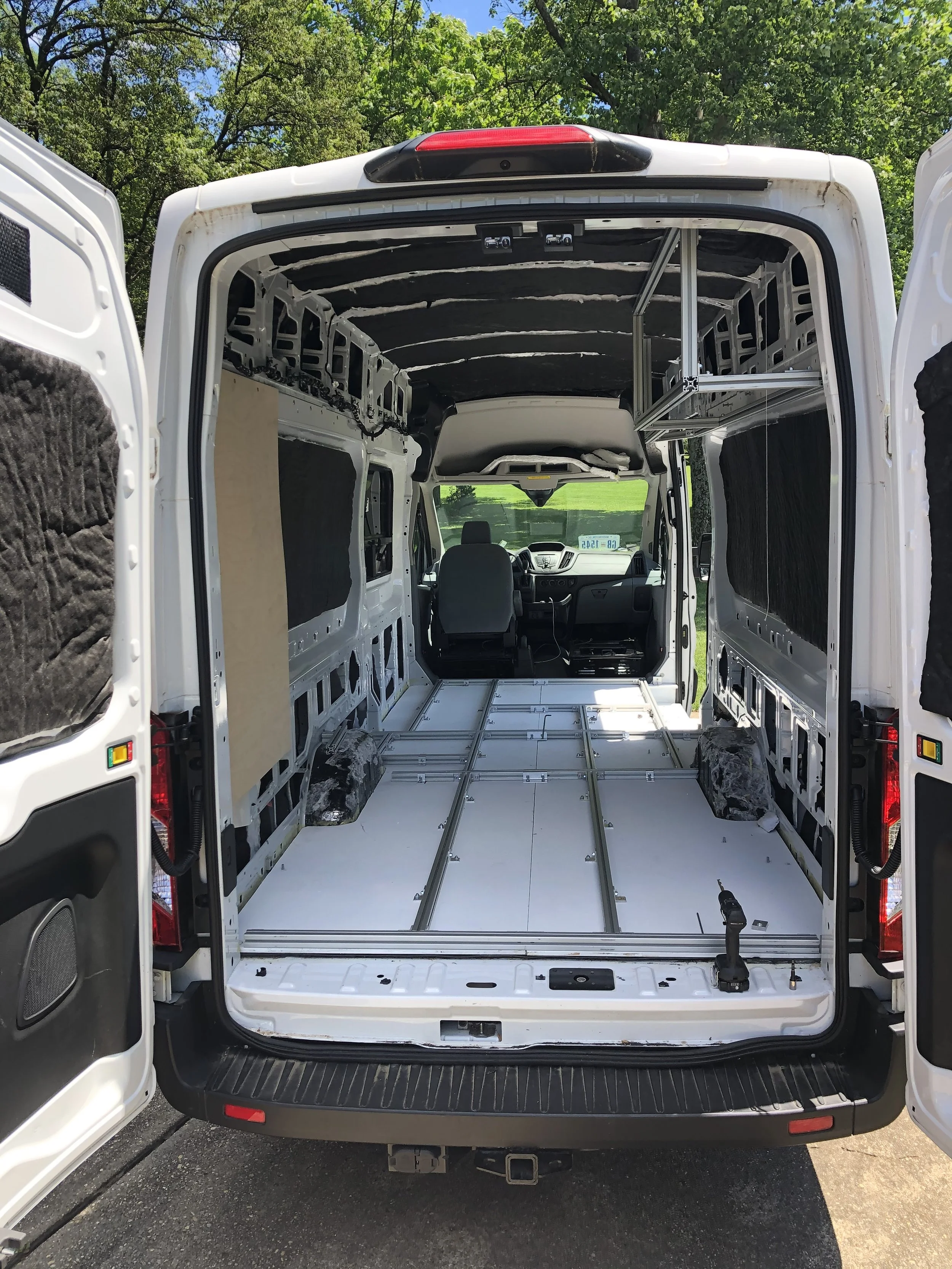
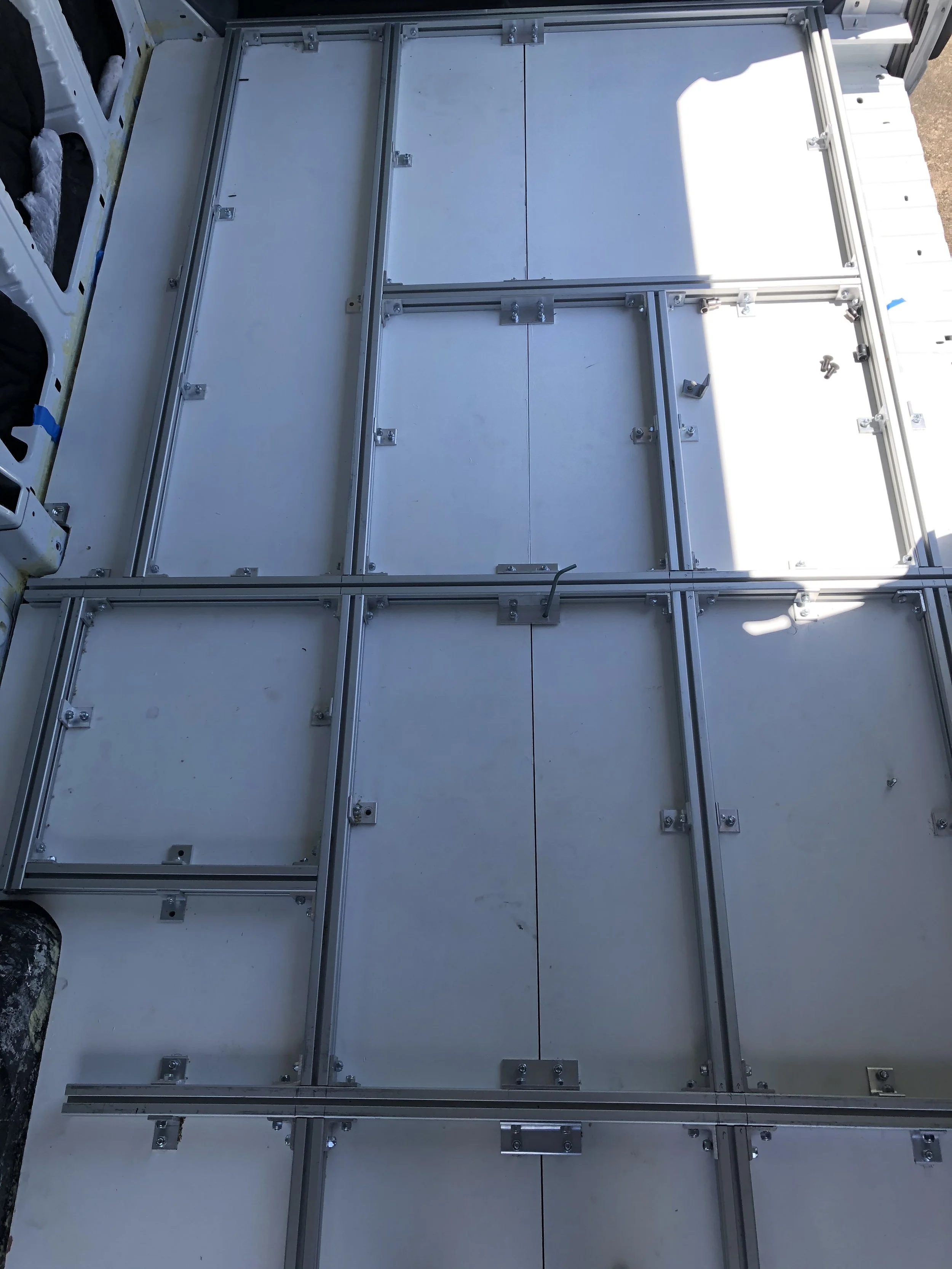
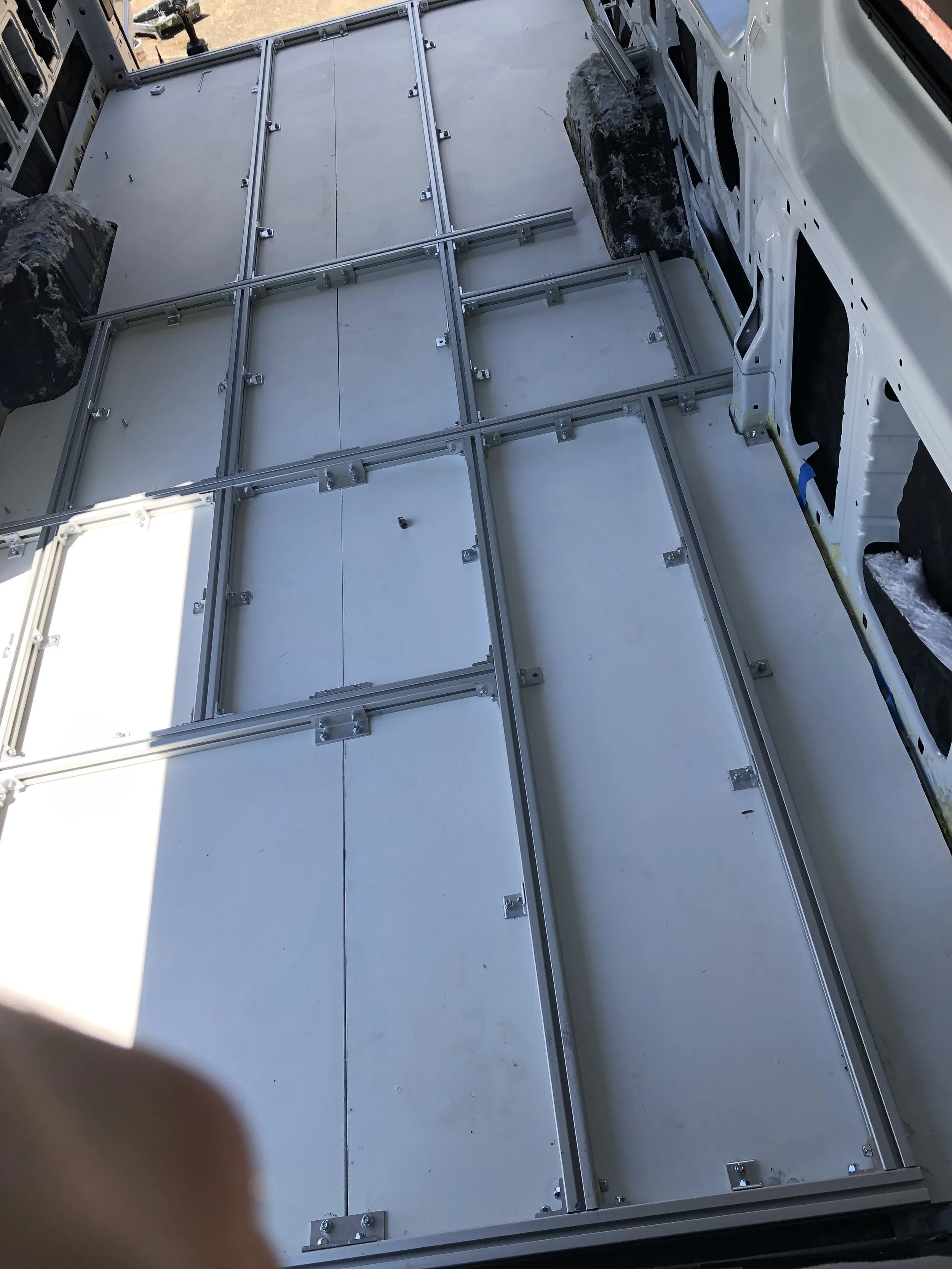
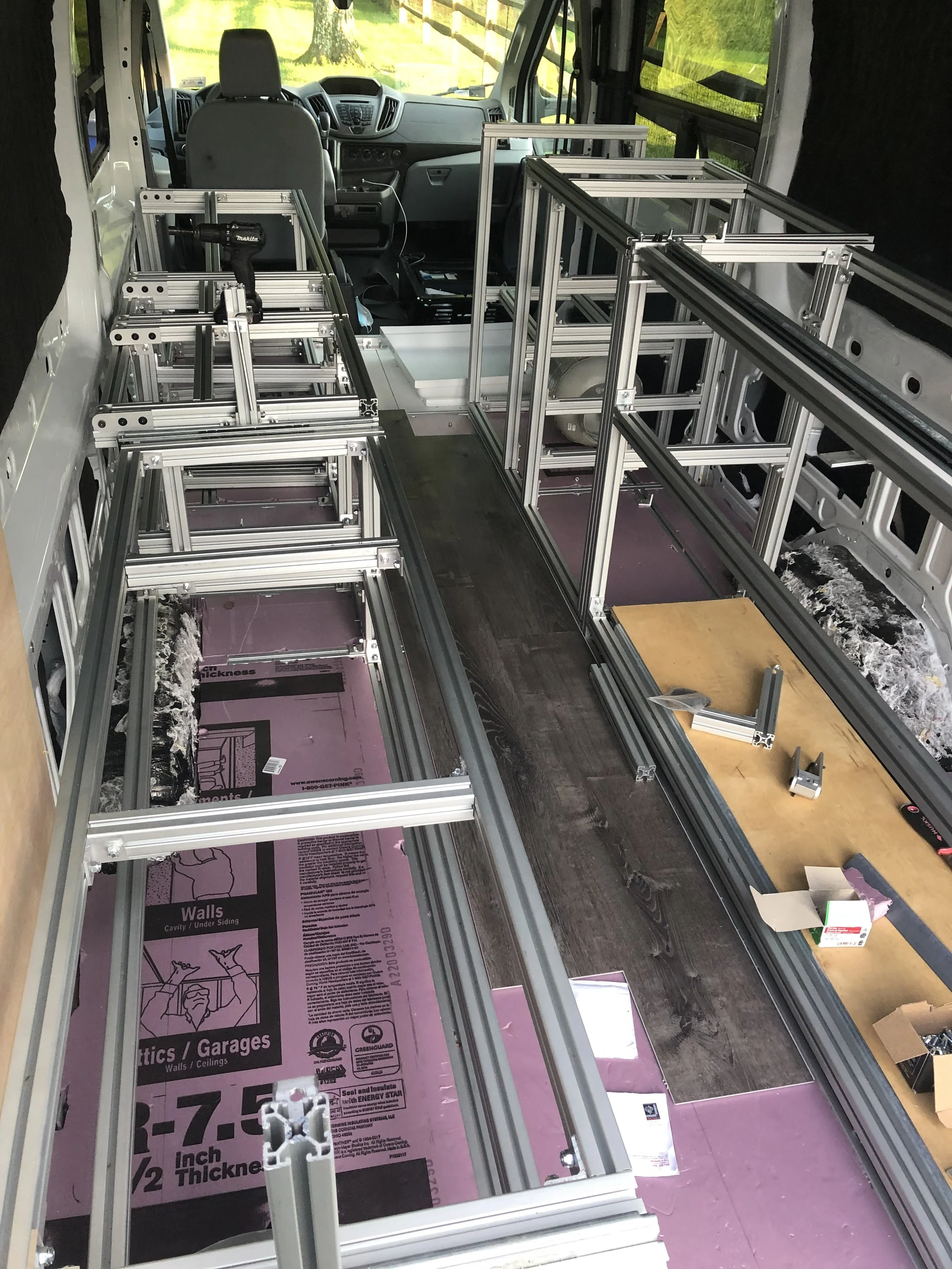
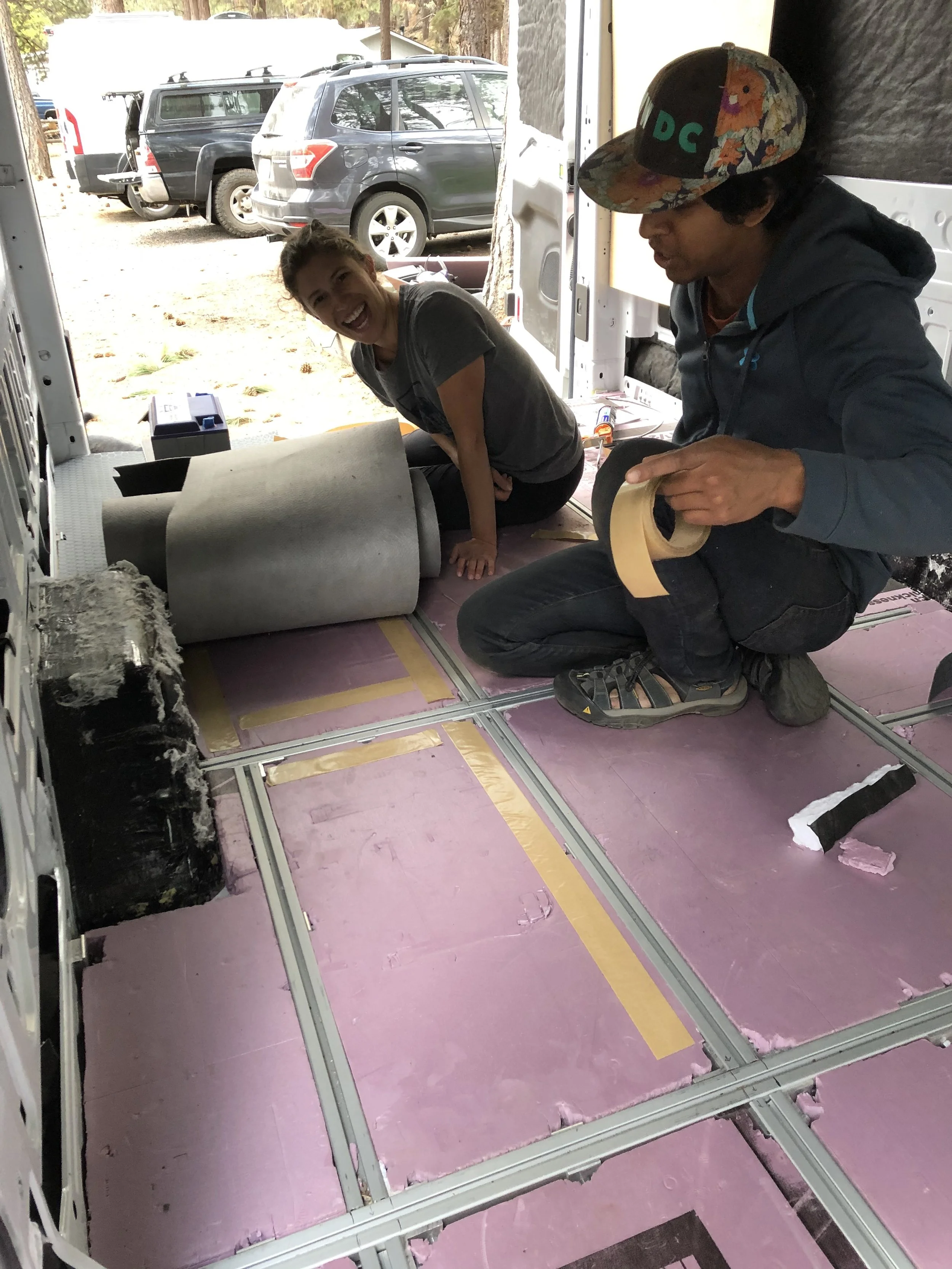
#4. 80/20 Aluminum Structure Base
The game-changer:
- Secured via elevator bolts with construction adhesive
- Anchored to studs beneath the plywood
- Plywood anchored to D-ring tie-downs using custom aluminum blocks
- Creates independent structural grid
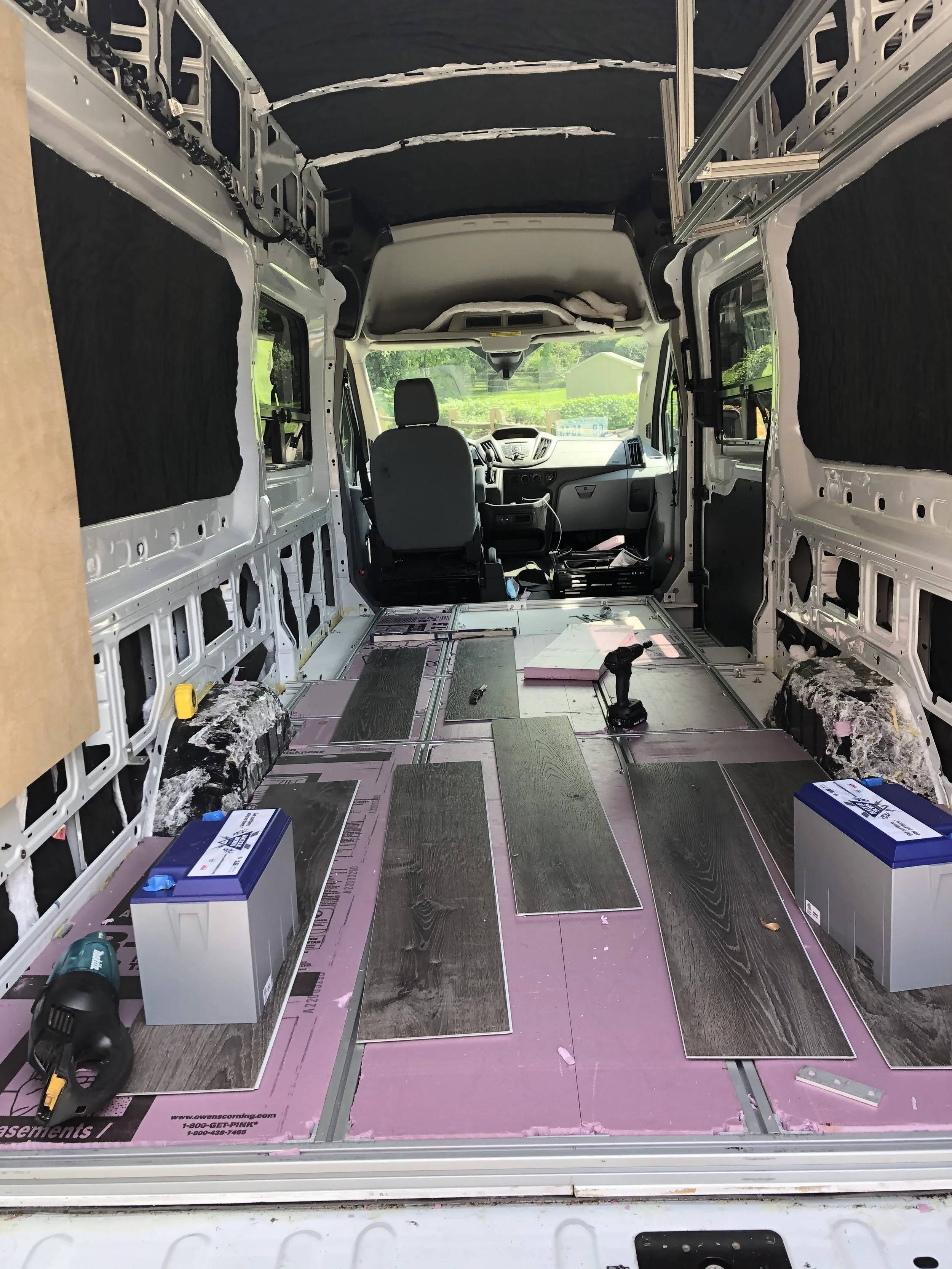
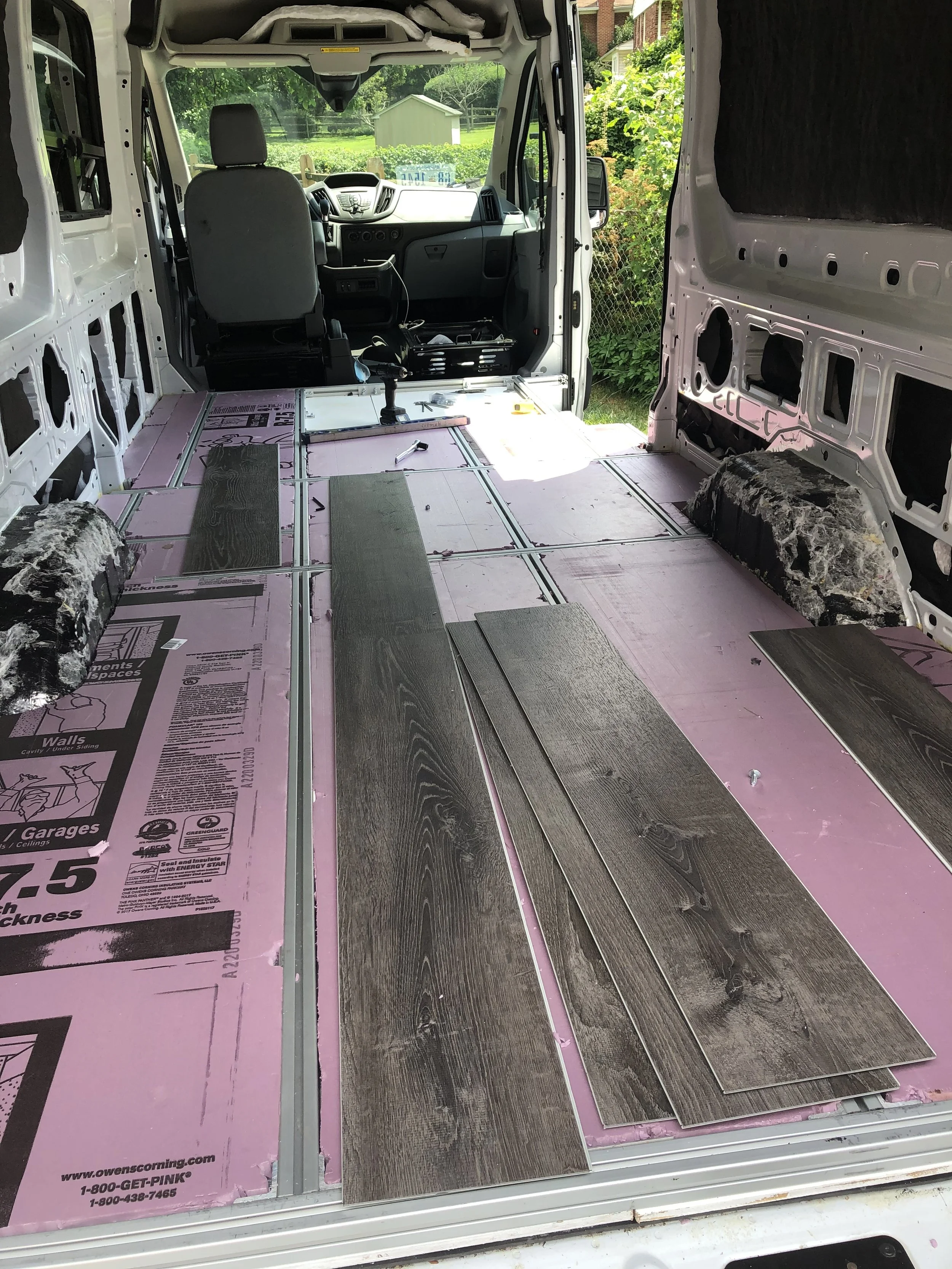
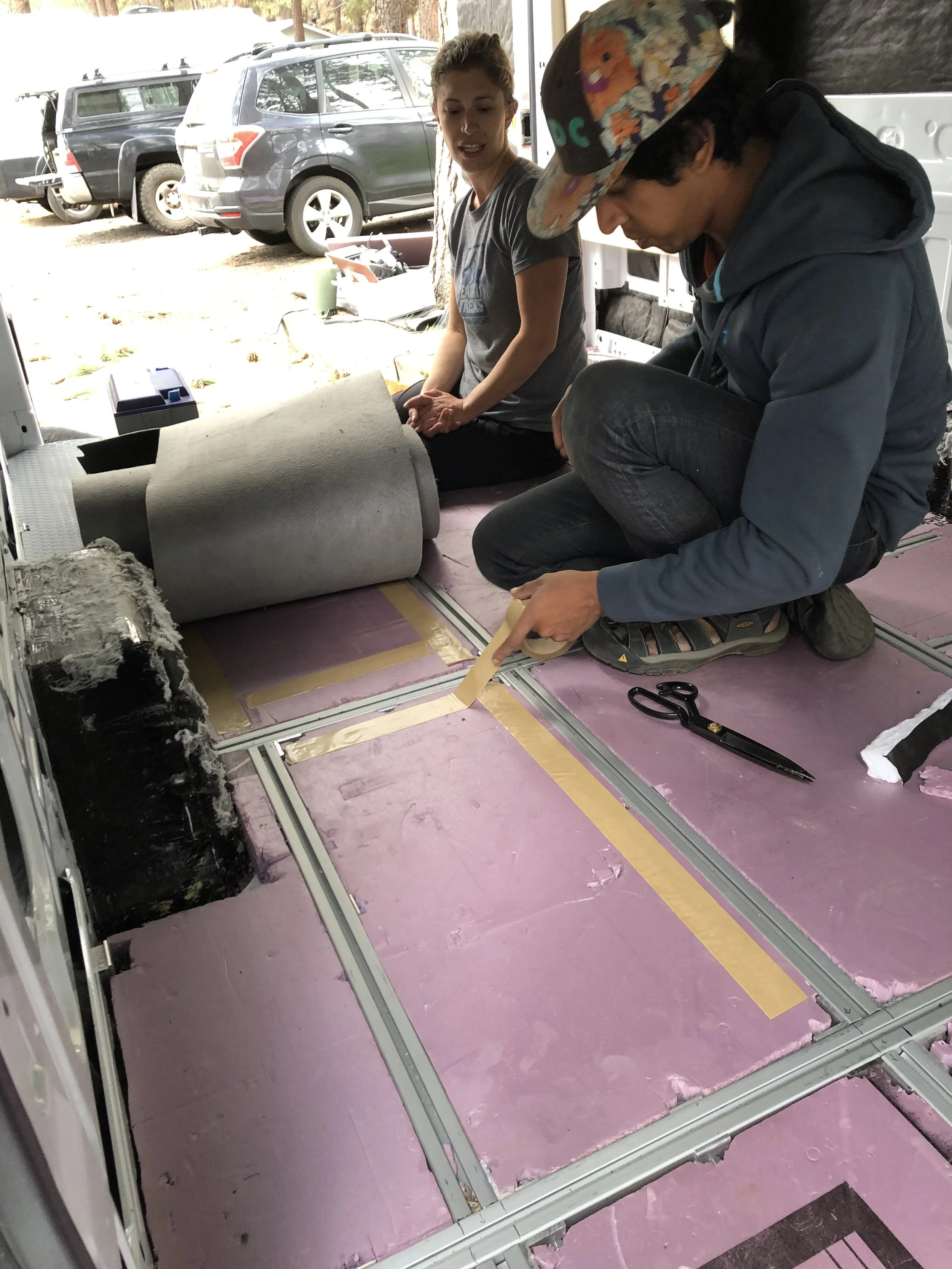
#5. Polyiso Rigid Foam Insulation
Fills gaps in the 80/20 grid:
- Creates even thickness
- Embedded t-slots remain accessible for cabinet anchoring
- R-value insulation from cold metal floor
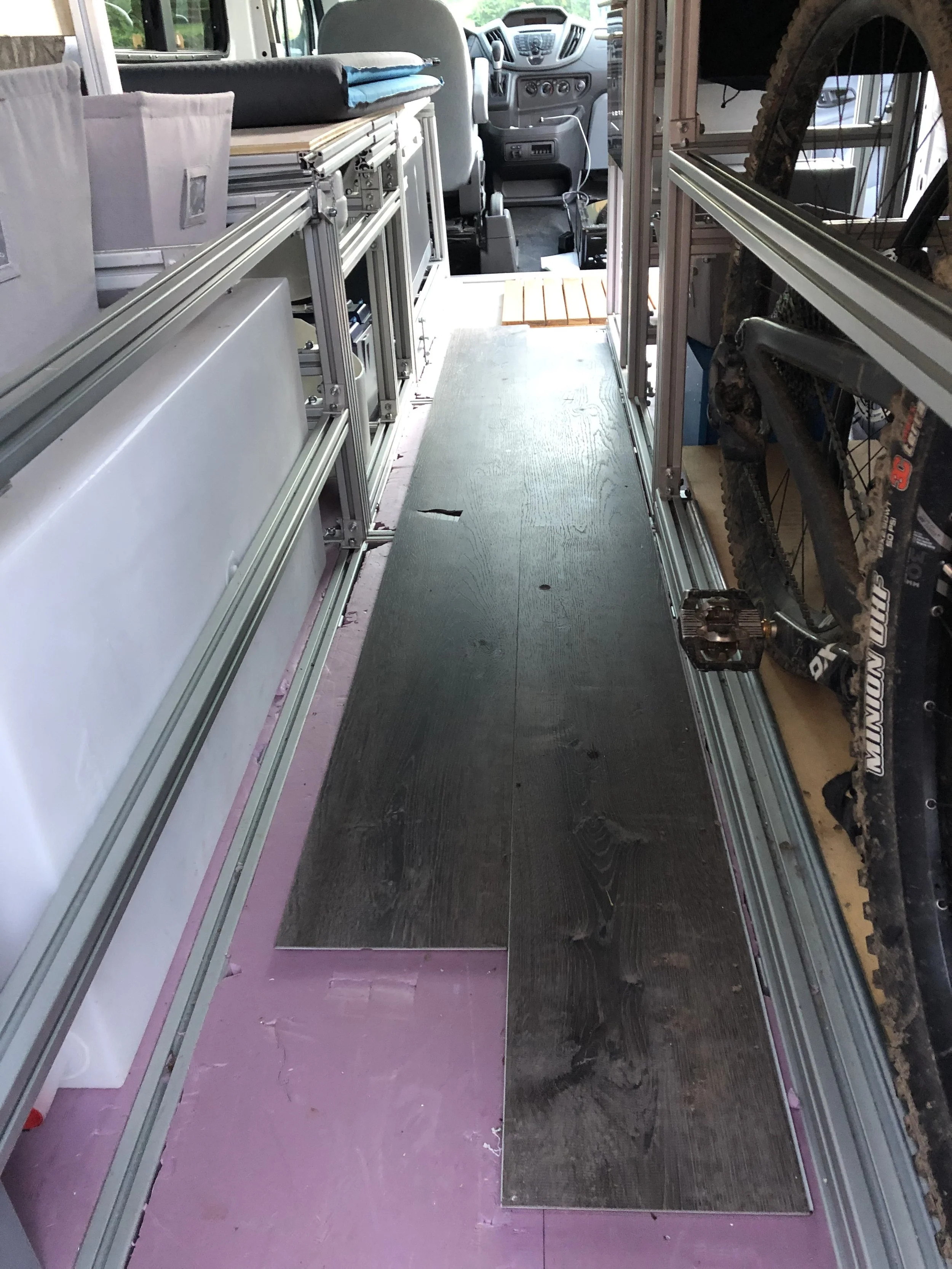
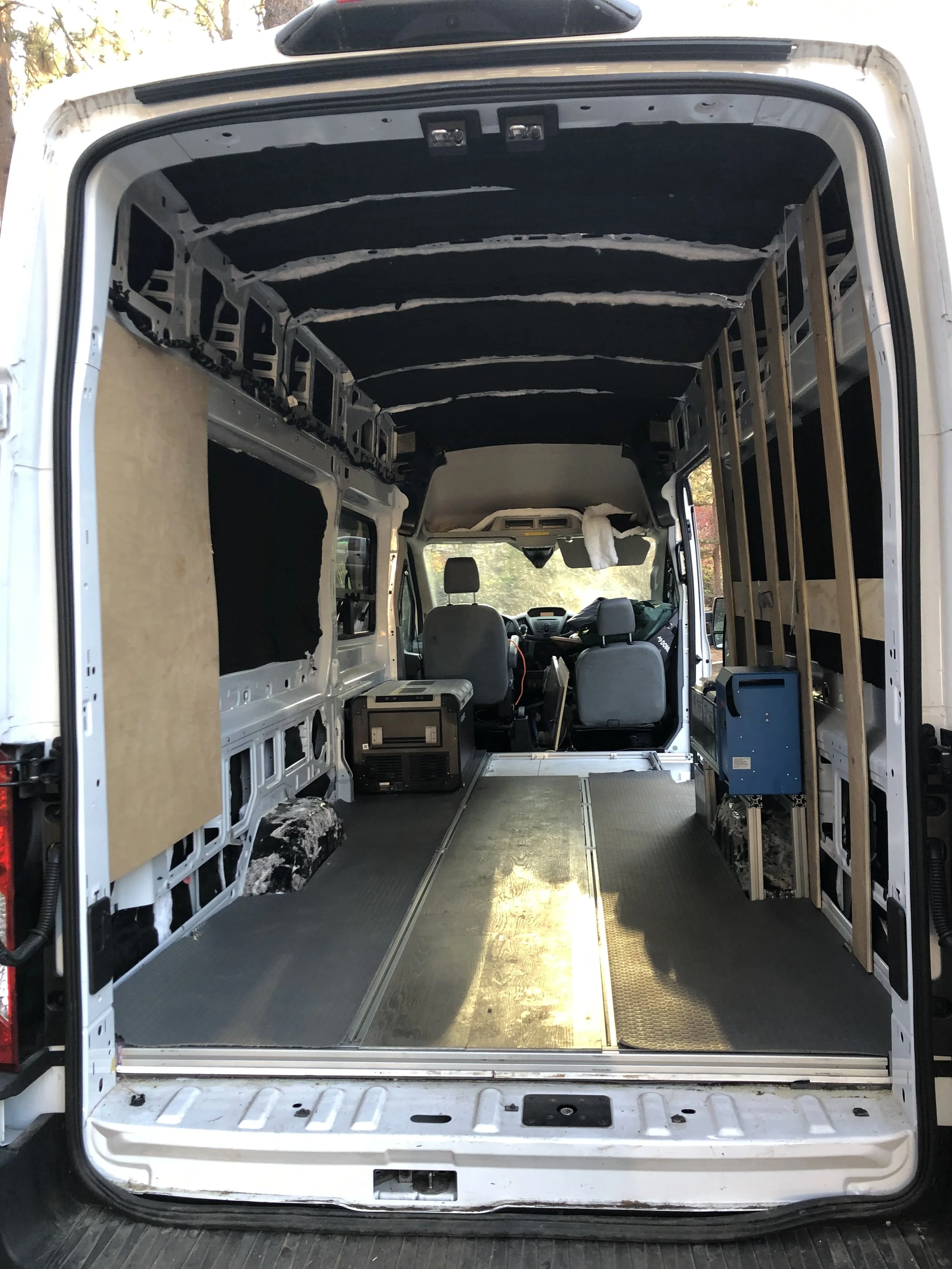
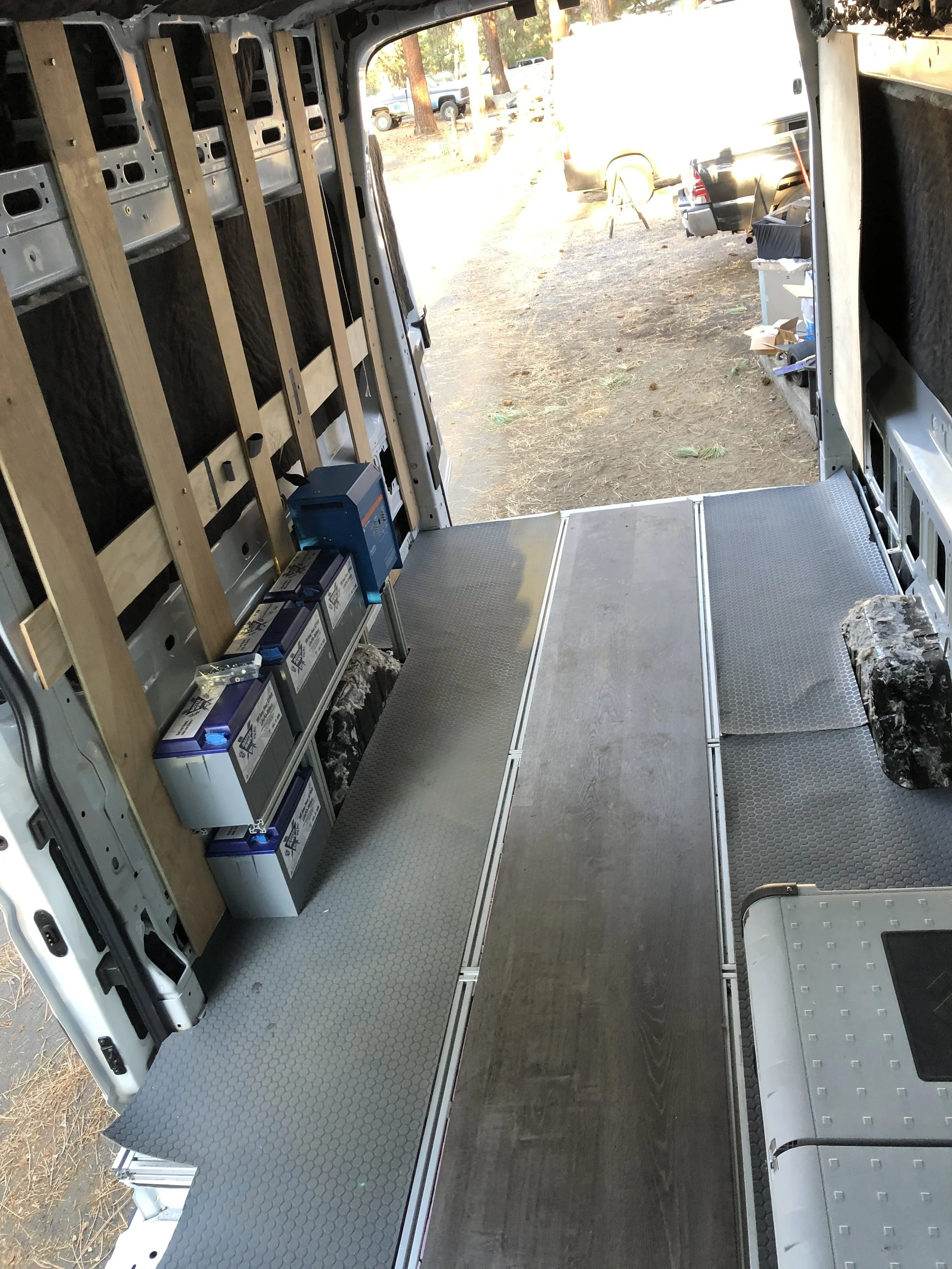
#6. Flooring Materials
- Vinyl plank in walkway areas (wood appearance)
- Coin pattern rubber in side areas (taped down)
#7. Fiberglass Layer
Added down the center walkway for additional durability.
#8. Heated Floor Pad
Electric heating pad for cold weather comfort.
#9. Final Vinyl Plank Layer
The topmost surface - durable, water-resistant, easy to clean.
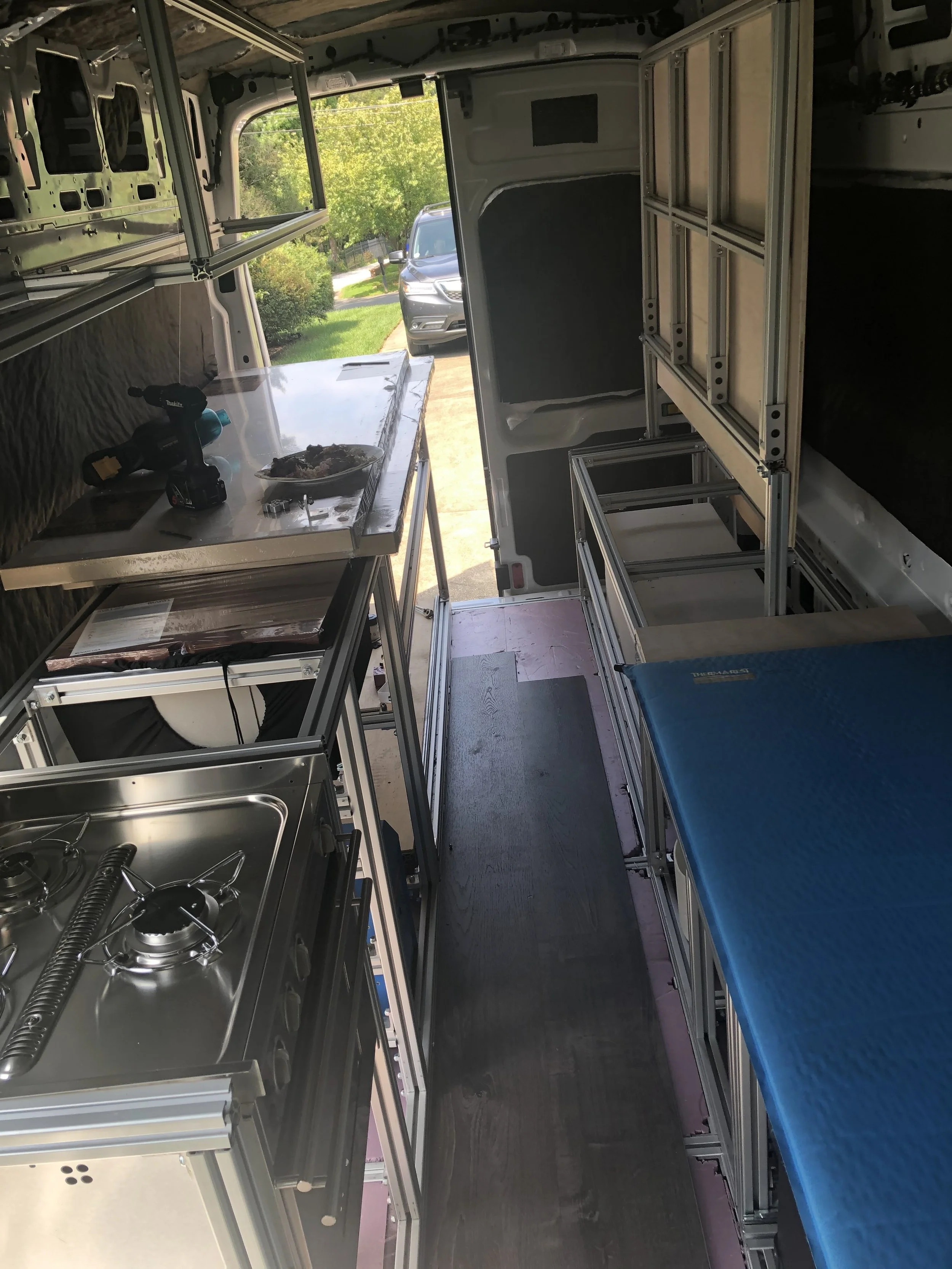
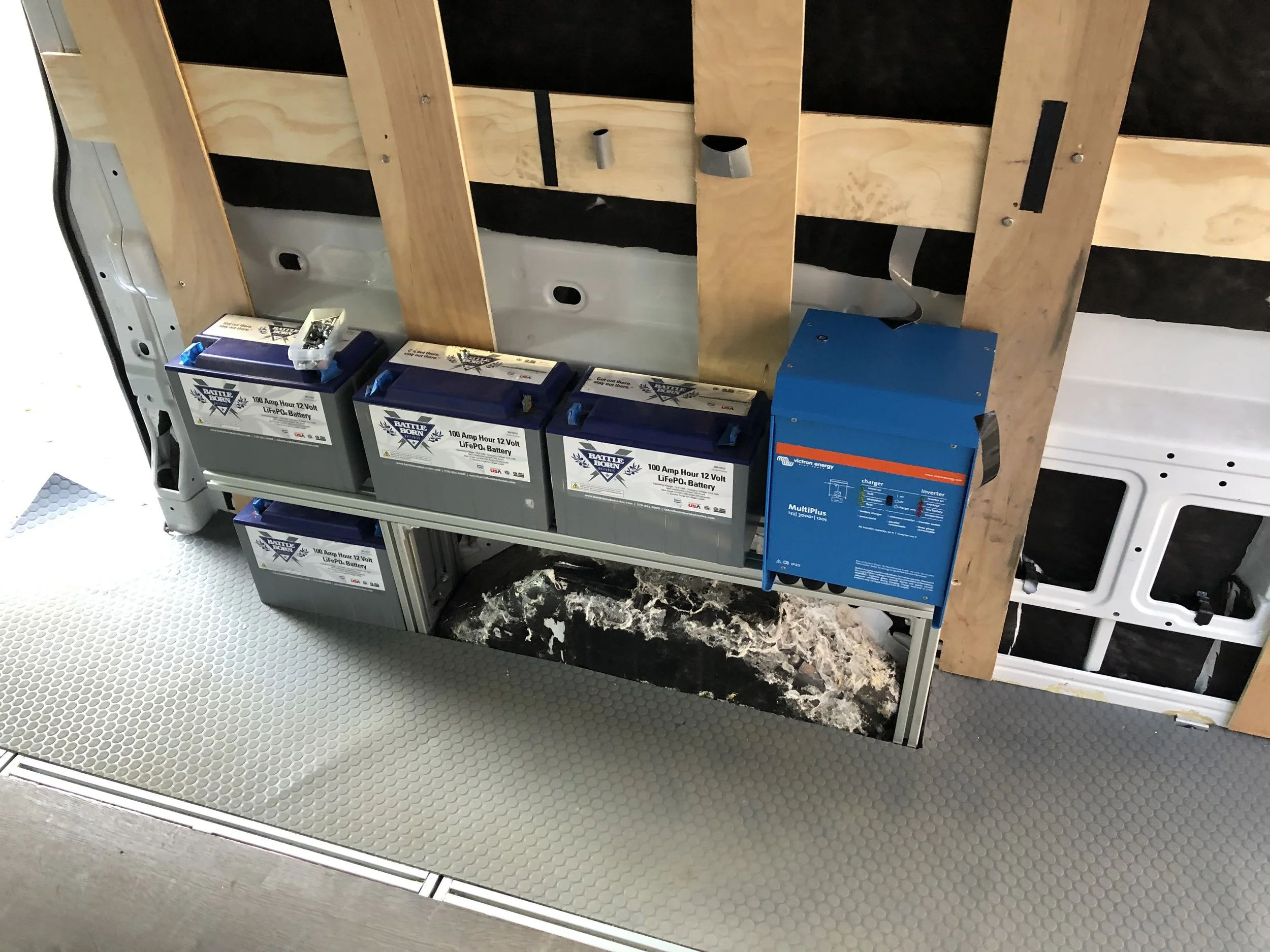
#10. 80/20 Cabinetry
Bolted down to open t-slots in the floor structure. Can be reconfigured or removed entirely.
Key Design Principles
Independent Structure: The floor provides structural support independent of the curved, hollow walls.
Thermal Break: Multiple insulation layers and wood anchors prevent cold transfer from the metal van floor.
Modularity: The 80/20 system allows complete reconfiguration of the interior without rebuilding.
Serviceability: Systems beneath the floor (electrical, plumbing) remain accessible.
Why This Matters
This floor system transformed the build. Instead of permanent cabinetry screwed into weak walls, everything mounts to a solid, configurable platform. When I wanted to add the butcher block extension or reposition storage, I just unbolted and moved things around.
Cost: Approximately $1,500 for materials (80/20, insulation, flooring, MLV)
Design Inspiration
This approach was inspired by Orton Transit's floor design. The result: warmth, flatness, and the capability to securely anchor or quickly remove interior cabinet modules.
The 10-Layer System
(Bottom to top)
#1. Microfoam Corrugation Fillers
Retained from Floor #1, filling gaps in the van's metal floor corrugations.
#2. Mass Loaded Vinyl (MLV)
Three-strip layout with offset seams for:
- Dampening road noise
- Providing a stable plywood base
#3. Birch Plywood Floor
Four sections from 4×8 sheets of 1/2" material, primer-painted for moisture protection.
#4. 80/20 Aluminum Structure Base
The game-changer:
- Secured via elevator bolts with construction adhesive
- Anchored to studs beneath the plywood
- Plywood anchored to D-ring tie-downs using custom aluminum blocks
- Creates independent structural grid
#5. Polyiso Rigid Foam Insulation
Fills gaps in the 80/20 grid:
- Creates even thickness
- Embedded t-slots remain accessible for cabinet anchoring
- R-value insulation from cold metal floor
#6. Flooring Materials
- Vinyl plank in walkway areas (wood appearance)
- Coin pattern rubber in side areas (taped down)
#7. Fiberglass Layer
Added down the center walkway for additional durability.
#8. Heated Floor Pad
Electric heating pad for cold weather comfort.
#9. Final Vinyl Plank Layer
The topmost surface - durable, water-resistant, easy to clean.
#10. 80/20 Cabinetry
Bolted down to open t-slots in the floor structure. Can be reconfigured or removed entirely.
Key Design Principles
Independent Structure: The floor provides structural support independent of the curved, hollow walls.
Thermal Break: Multiple insulation layers and wood anchors prevent cold transfer from the metal van floor.
Modularity: The 80/20 system allows complete reconfiguration of the interior without rebuilding.
Serviceability: Systems beneath the floor (electrical, plumbing) remain accessible.
Why This Matters
This floor system transformed the build. Instead of permanent cabinetry screwed into weak walls, everything mounts to a solid, configurable platform. When I wanted to add the butcher block extension or reposition storage, I just unbolted and moved things around.
Cost: Approximately $1,500 for materials (80/20, insulation, flooring, MLV)
(Bottom to top)
#
1. Microfoam Corrugation Fillers
Retained from Floor #1, filling gaps in the van's metal floor corrugations.
#2. Mass Loaded Vinyl (MLV)
Three-strip layout with offset seams for:
- Dampening road noise
- Providing a stable plywood base
#3. Birch Plywood Floor
Four sections from 4×8 sheets of 1/2" material, primer-painted for moisture protection.
#4. 80/20 Aluminum Structure Base
The game-changer:
- Secured via elevator bolts with construction adhesive
- Anchored to studs beneath the plywood
- Plywood anchored to D-ring tie-downs using custom aluminum blocks
- Creates independent structural grid
#5. Polyiso Rigid Foam Insulation
Fills gaps in the 80/20 grid:
- Creates even thickness
- Embedded t-slots remain accessible for cabinet anchoring
- R-value insulation from cold metal floor
#6. Flooring Materials
- Vinyl plank in walkway areas (wood appearance)
- Coin pattern rubber in side areas (taped down)
#7. Fiberglass Layer
Added down the center walkway for additional durability.
#8. Heated Floor Pad
Electric heating pad for cold weather comfort.
#9. Final Vinyl Plank Layer
The topmost surface - durable, water-resistant, easy to clean.
#10. 80/20 Cabinetry
Bolted down to open t-slots in the floor structure. Can be reconfigured or removed entirely.
Key Design Principles
Independent Structure: The floor provides structural support independent of the curved, hollow walls.
Thermal Break: Multiple insulation layers and wood anchors prevent cold transfer from the metal van floor.
Modularity: The 80/20 system allows complete reconfiguration of the interior without rebuilding.
Serviceability: Systems beneath the floor (electrical, plumbing) remain accessible.
Why This Matters
This floor system transformed the build. Instead of permanent cabinetry screwed into weak walls, everything mounts to a solid, configurable platform. When I wanted to add the butcher block extension or reposition storage, I just unbolted and moved things around.
Cost: Approximately $1,500 for materials (80/20, insulation, flooring, MLV)
Three-strip layout with offset seams for:
- Dampening road noise
- Providing a stable plywood base
#3. Birch Plywood Floor
Four sections from 4×8 sheets of 1/2" material, primer-painted for moisture protection.
#4. 80/20 Aluminum Structure Base
The game-changer:- Secured via elevator bolts with construction adhesive
- Anchored to studs beneath the plywood
- Plywood anchored to D-ring tie-downs using custom aluminum blocks
- Creates independent structural grid
#5. Polyiso Rigid Foam Insulation
Fills gaps in the 80/20 grid:- Creates even thickness
- Embedded t-slots remain accessible for cabinet anchoring
- R-value insulation from cold metal floor
#6. Flooring Materials
- Vinyl plank in walkway areas (wood appearance)
- Coin pattern rubber in side areas (taped down)
#7. Fiberglass Layer
Added down the center walkway for additional durability.
#8. Heated Floor Pad
Electric heating pad for cold weather comfort.
#9. Final Vinyl Plank Layer
The topmost surface- durable, water-resistant, easy to clean.
#10. 80/20 Cabinetry
Bolted down to open t-slots in the floor structure. Can be reconfigured or removed entirely.Key Design Principles
Independent Structure: The floor provides structural support independent of the curved, hollow walls.
Thermal Break: Multiple insulation layers and wood anchors prevent cold transfer from the metal van floor.
Modularity: The 80/20 system allows complete reconfiguration of the interior without rebuilding.
Serviceability: Systems beneath the floor (electrical, plumbing) remain accessible.Why This Matters
This floor system transformed the build. Instead of permanent cabinetry screwed into weak walls, everything mounts to a solid, configurable platform. When I wanted to add the butcher block extension or reposition storage, I just unbolted and moved things around.
Cost: Approximately $1,500 for materials (80/20, insulation, flooring, MLV)
- durable, water-resistant, easy to clean.
- Coin pattern rubber in side areas (taped down)
- Vinyl plank in walkway areas (wood appearance)
- R-value insulation from cold metal floor
- Embedded t-slots remain accessible for cabinet anchoring
- Creates even thickness
- Creates independent structural grid
- Plywood anchored to D-ring tie-downs using custom aluminum blocks
- Anchored to studs beneath the plywood
- Secured via elevator bolts with construction adhesive
- Providing a stable plywood base
Photos (31)